
Activities
CONTENTS
Seminar on the Evaluation of the Training Programme and Learning Outcomes 2023 – Foreign Trade Major.
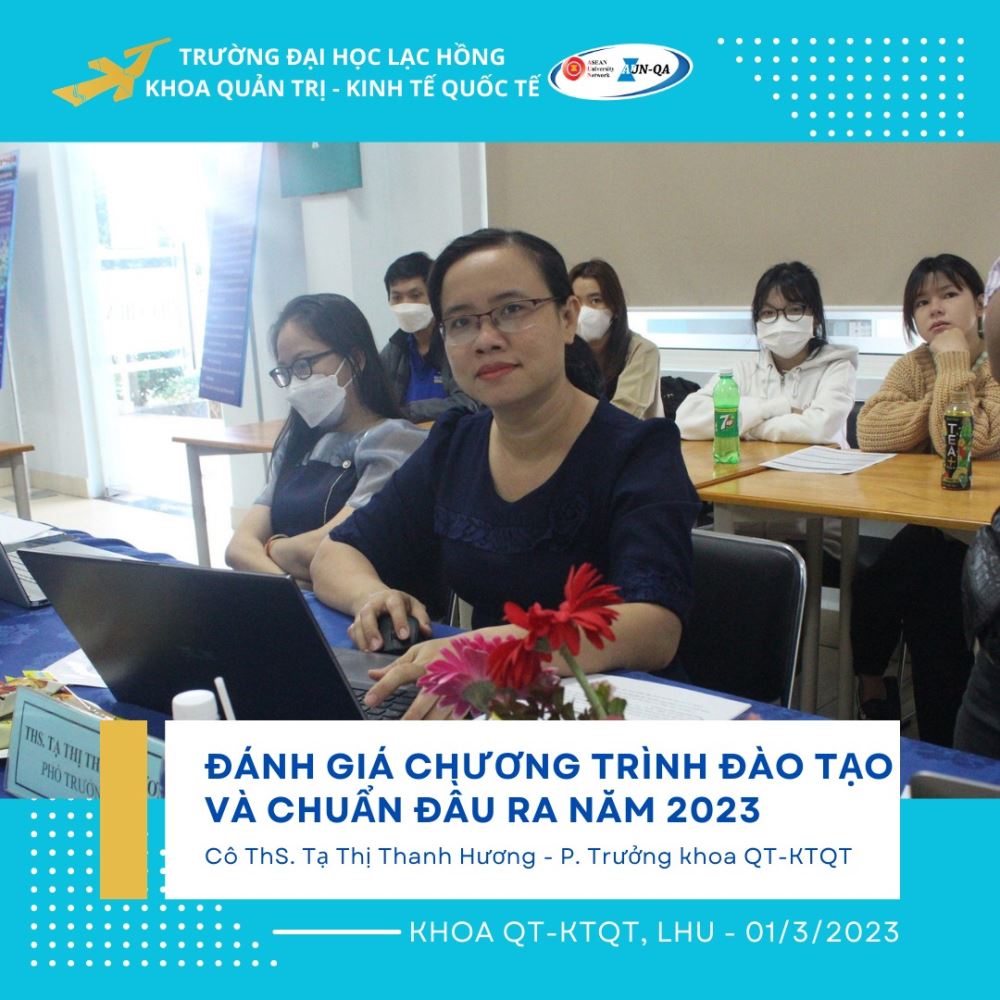
On 1 March 2023, The Faculty of Administration International Economics, Lac Hong University organized a seminar to evaluate the training programme and learning outcomes of the Economics (Foreign Trade) major. The programme was held in Room D105 (Co–Working Space), Campus 2 – Lac Hong University, with the participation of:
-
PhD Nguyen Van Tan – Dean of The Faculty of Administration International Economics;
-
MB Ta Thi Thanh Huong – Vice Dean of The Faculty of Administration International Economics;
-
MB Nguyen Thanh Hoa Binh – Head of Division of International Business;
-
MB Nguyen Thi Bich Thuy – Head of Division of Marketing and Commerce.
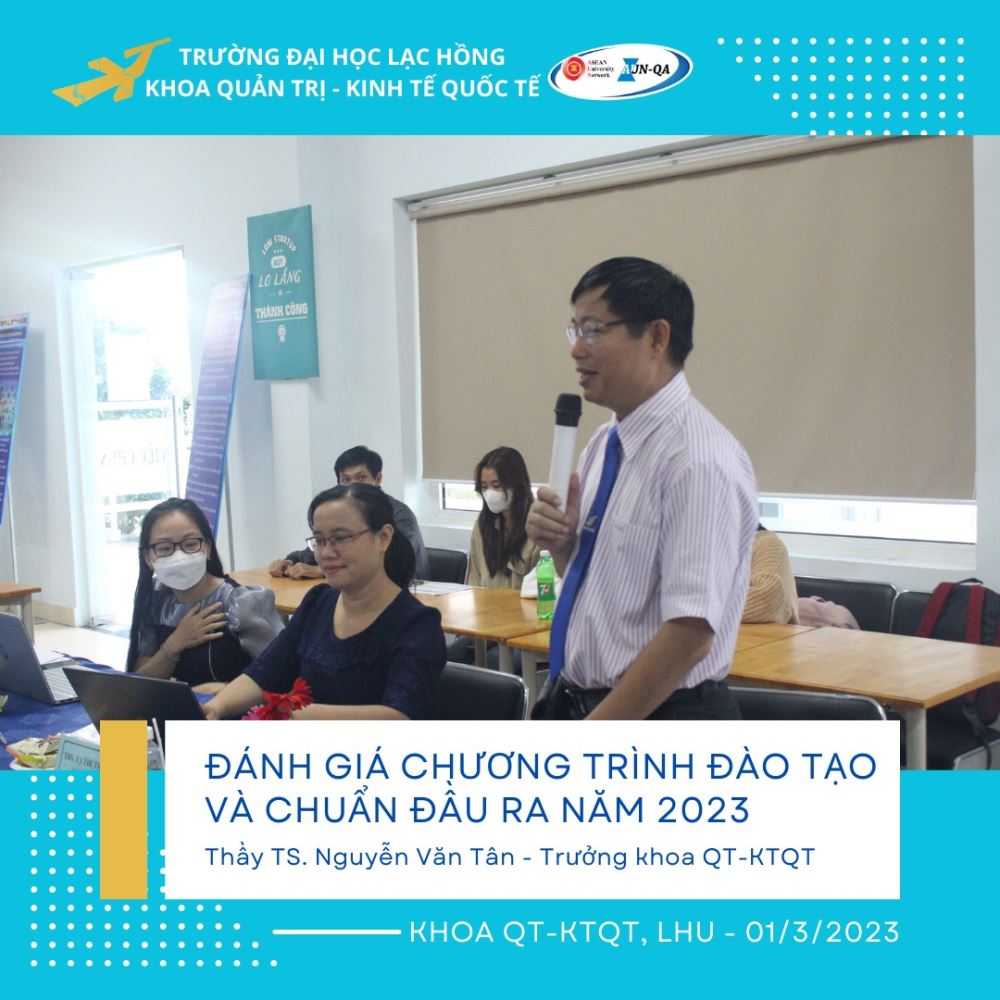
Along with lecturers, staff members, and guests from various organizations. The seminar was successfully conducted and received numerous valuable contributions and updates aimed at improving and enhancing the training quality of The Faculty of Administration International Economics.
Accompanying the Faculty and students, The Faculty of Administration International Economics was honored to welcome distinguished guests from the following organizations:
-
Mr. Nguyen Tien Chuong – Chairman of the Dong Nai Import-Export Association;
-
Mr. Nguyen Duy Hung – Director of Hung Thinh Phat Company;
-
Mr. Van Cong Hai – Head of Customer Relations Team.
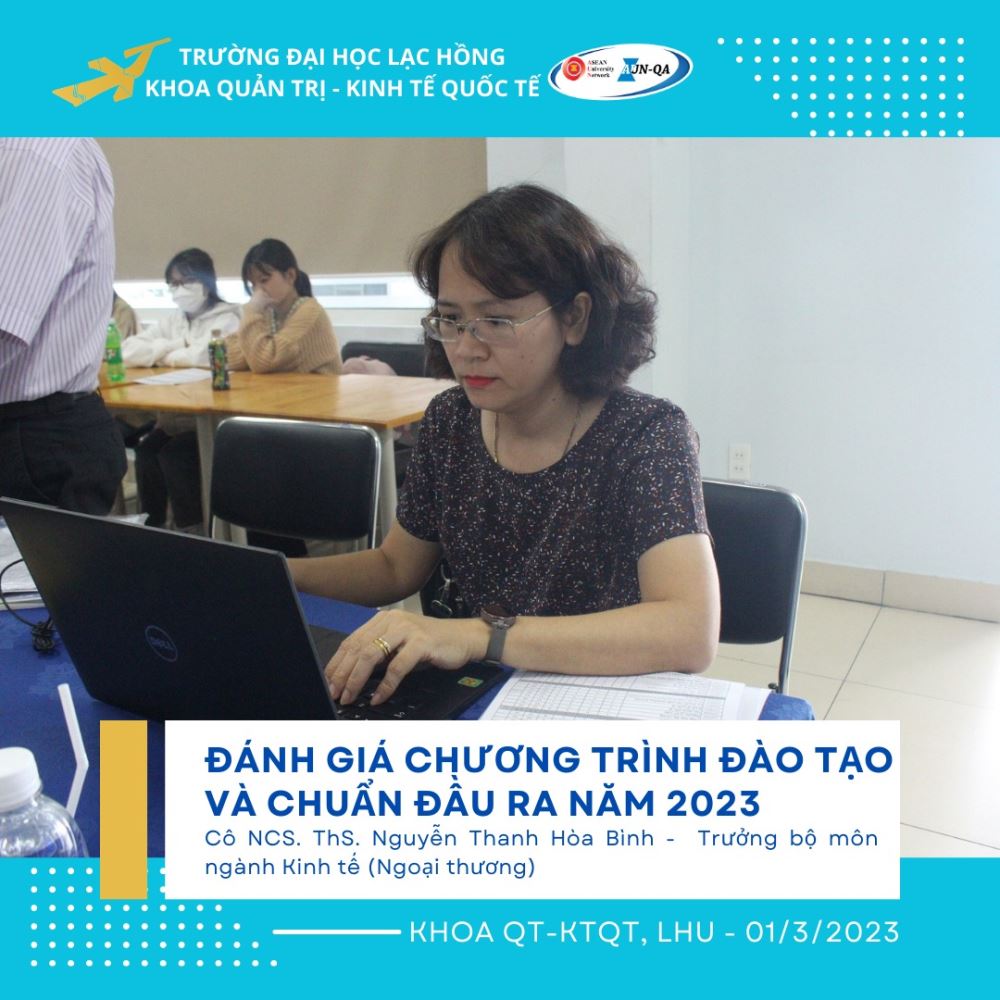
MB Nguyen Thanh Hoa Binh – Head of Division of International Business introduced the training programme of the major to the guests. Following the presentation, the experts actively contributed opinions and proposed solutions to improve and enhance the training quality of the Economics (Foreign Trade) major in alignment with current trends, as well as provided recommendations for lecturers and students to adjust their mindset and reinforce more effective learning practices.
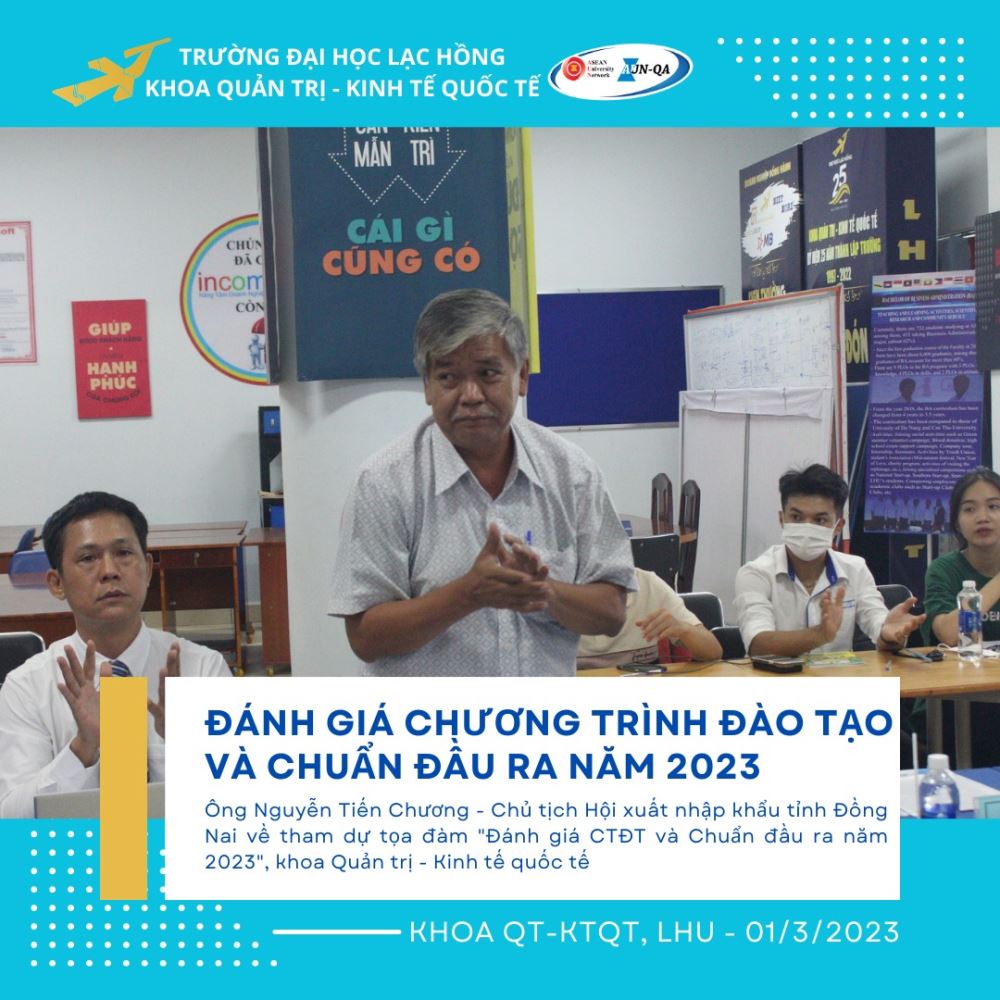
According to Mr. Nguyen Tien Chuong, the Quality Management course relates to many issues; therefore, lecturers need to equip students with frameworks and methodologies so that students’ knowledge does not remain confined to the classroom and they are able to continue self-learning after graduation, ensuring competence in practical work. Currently, society places significant emphasis on green products, as they are associated with a series of standards required for export. Therefore, students need to possess a certain level of understanding of this issue.
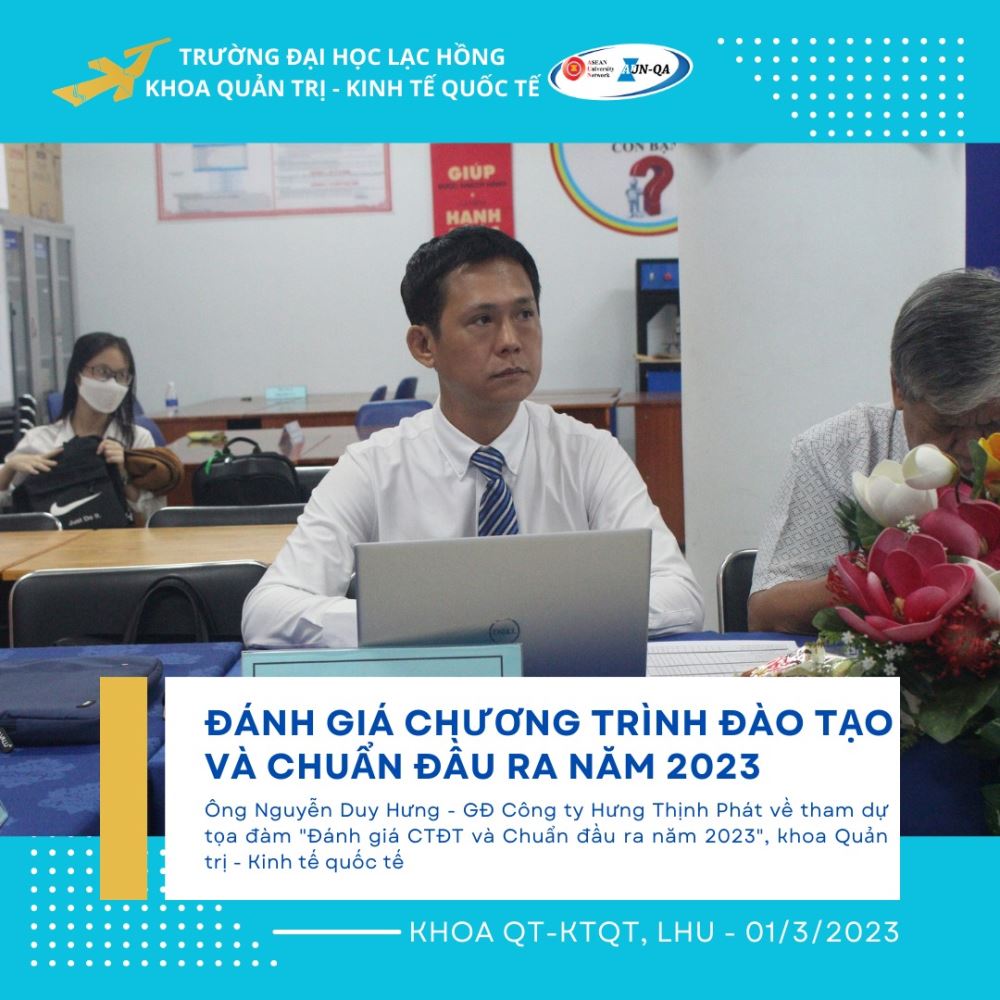
Mr. Nguyen Duy Hung suggested that the Quality Management and Logistics courses should be compulsory. In particular, if students study Logistics in depth, they can perform various types of jobs. The Organizational Behavior course for students of the Economics (Foreign Trade) major should also include external behavioral conduct, as this represents students’ international competencies. In addition, the Faculty should organize programmes or competitions on Foreign Trade economic talent to increase students’ interest in the major, thereby fostering greater attachment to the specialization. The University should design experiential programmes to eliminate the gap between academic study and practical reality.
According to Mr. Van Cong Hai, the current curriculum includes too many English courses; therefore, the University should create foreign language platforms and activities for students to enhance reflexes and confidence in foreign language communication. The duration of the Taxation and Principles of Accounting courses should be increased. In practice, with the issuance of Circulars 38 and 39 (as amended and supplemented), the requirements for import-export activities and related departments (warehouse, production, etc.) have become increasingly urgent. In the International Commercial Law and International Business Management courses, additional time should be allocated for students to conduct in-depth research on multilateral and bilateral agreements, new regulations on certificates of origin (C/O), methods of calculating content, HS conversion, and related matters. Regarding C/O, Foreign Trade students rarely have an in-depth understanding of this issue.
After the experts’ contributions, students actively raised long-standing questions for clarification by the experts, who provided guidance and solutions to support students in their personal development.
After a period of sharing valuable and noteworthy content, the seminar concluded successfully. Lecturers and students gained meaningful lessons and insights from the experts. All participants expressed determination to jointly enhance teaching and training quality in order to develop future generations effectively and in alignment with current trends.
