
Activities
CONTENTS
Evaluation of the Training Programme and Learning Outcomes of the Tourism and Travel Management Major.
On 3 March 2023, The Faculty of Administration International Economics, Lac Hong University organized a seminar to evaluate the training programme and learning outcomes of the Tourism and Travel Management major. The programme was held in Room D105 (Co–Working Space), Campus 2 – Lac Hong University, with the participation of:
-
MB Ta Thi Thanh Huong – Vice Dean of The Faculty of Administration International Economics;
-
MB Phan Van Hai – Head of Division of Tourism Administration and Management;
-
MB Vu Duc Cuong – Head of Division of Tourism Operations and Tour Guiding.
Along with lecturers, staff members, and guests from various organizations. The seminar was successfully conducted and received numerous valuable contributions and updates aimed at improving and enhancing the training quality of The Faculty of Administration International Economics.
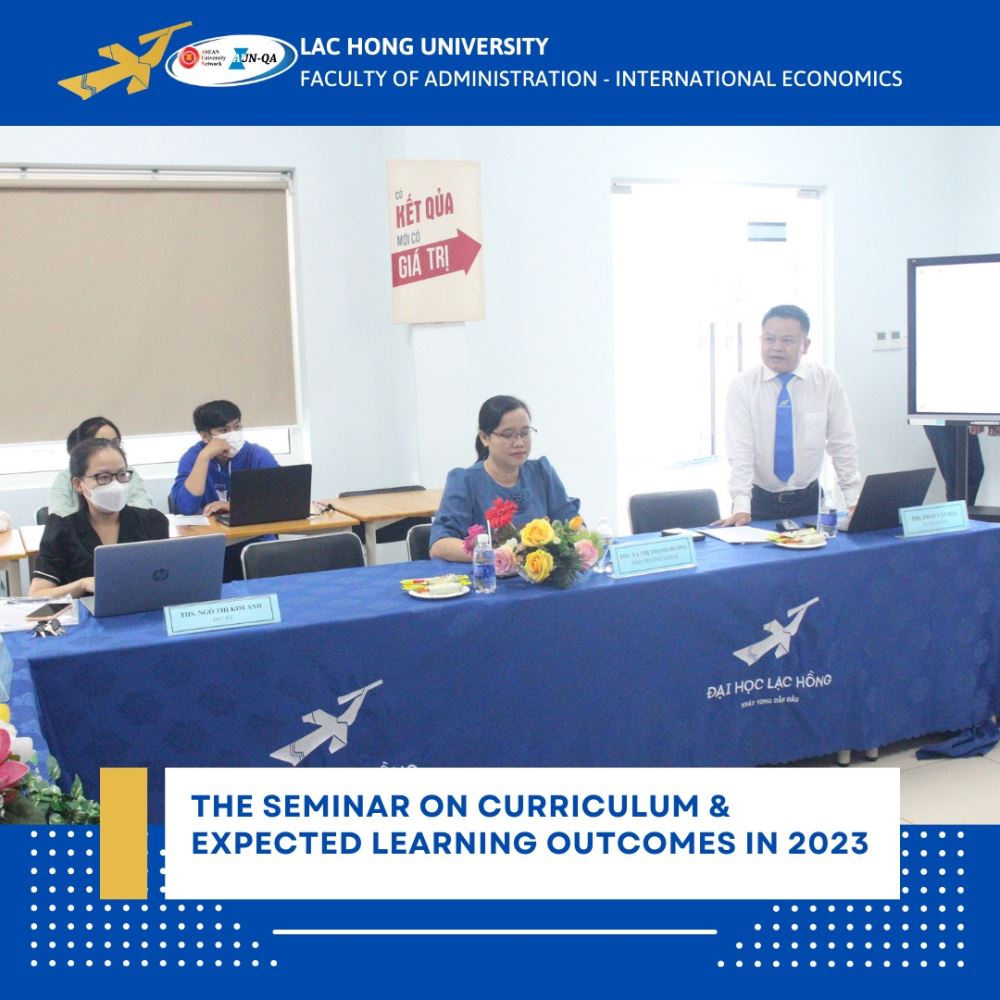
Accompanying the Faculty and students, The Faculty of Administration International Economics was honored to welcome distinguished guests from the following organizations:
-
Mr. Nguyen Hong An – Deputy Director of the Department of Culture, Sports and Tourism of Dong Nai Province;
-
Mr. Nguyen Truong Giang – Head of Business Department, Thai Loan Travel Company;
-
Ms. Nguyen Thi Thuy An – Viet Holiday Travel Company.
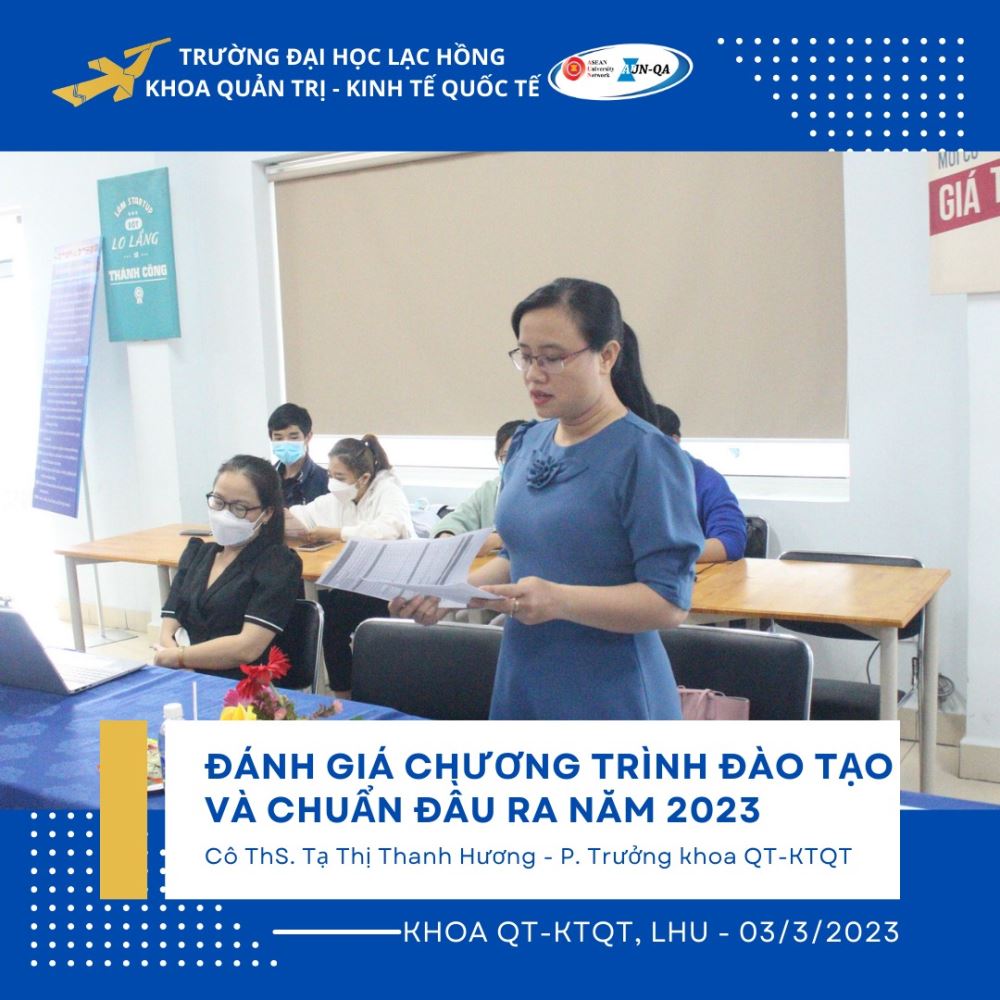
MB Phan Van Hai – Head of Division of Tourism Administration and Management introduced the training programme of the major to the guests. Following the presentation, the experts actively contributed opinions and proposed solutions to improve and enhance the training quality of the Tourism and Travel Management major in alignment with current trends, as well as provided recommendations for lecturers and students to adjust their mindset and reinforce more effective learning practices.
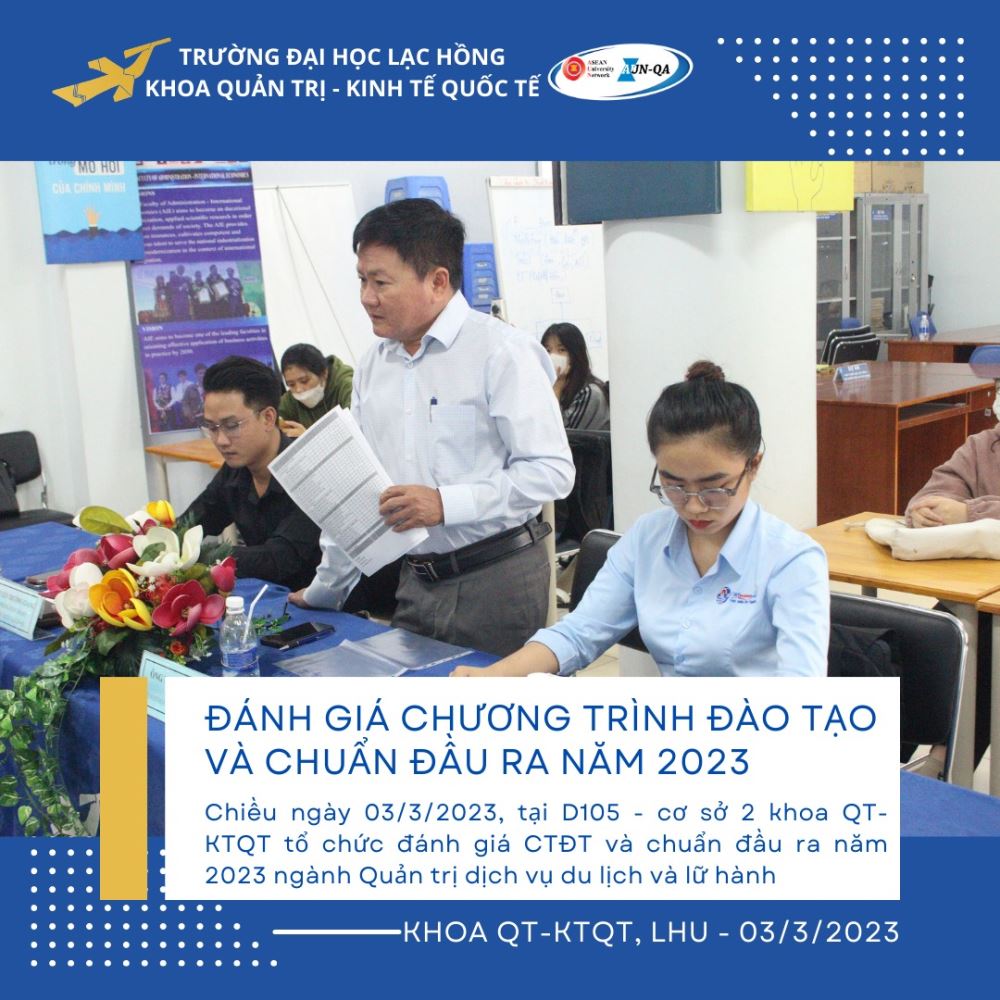
According to Mr. Nguyen Hong An, currently some tour guides provide inaccurate introductions, which requires students to be persistent and primarily self-directed in learning, as lecturers cannot convey all knowledge. The Training Programme should increase the number of credits in courses related to culture and history, such as: History of World Civilization, Vietnamese Cultural Foundations, Interpretation at Tourist Destinations, Festival Event Management, and reduce the duration of general courses.
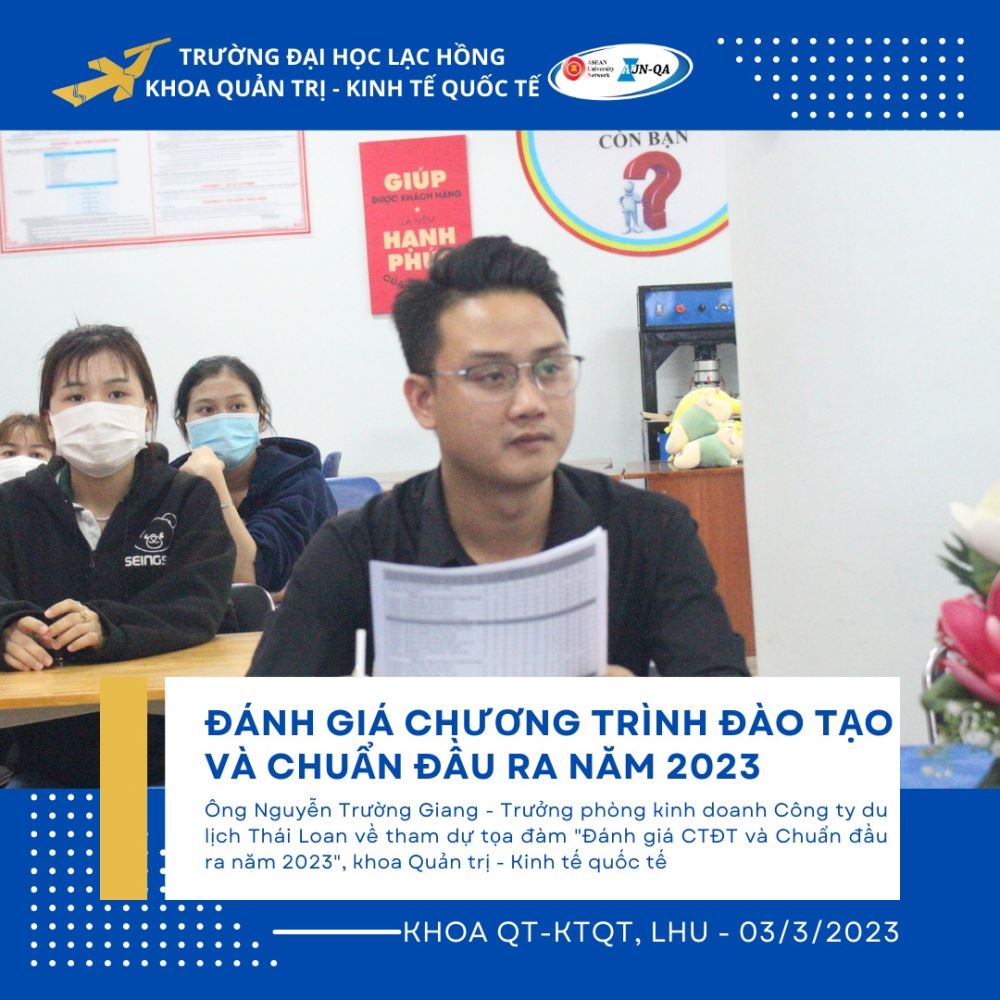
According to Mr. Nguyen Truong Giang, several elective courses are essential, such as: First Aid and Animation Skills, Sales Management in Tourism. Regarding Korean and Japanese language courses, studying for four semesters is not sufficiently in-depth. For the Festival Event Management course, instead of focusing solely on theory, lecturers should divide students into groups, assign each group a specific region to present or deliver commentary. The University should enhance cooperation with companies from the first year to organize events and allow students to engage with company operational models. The University should also strengthen office informatics training for students and establish additional clubs, associations, and groups.
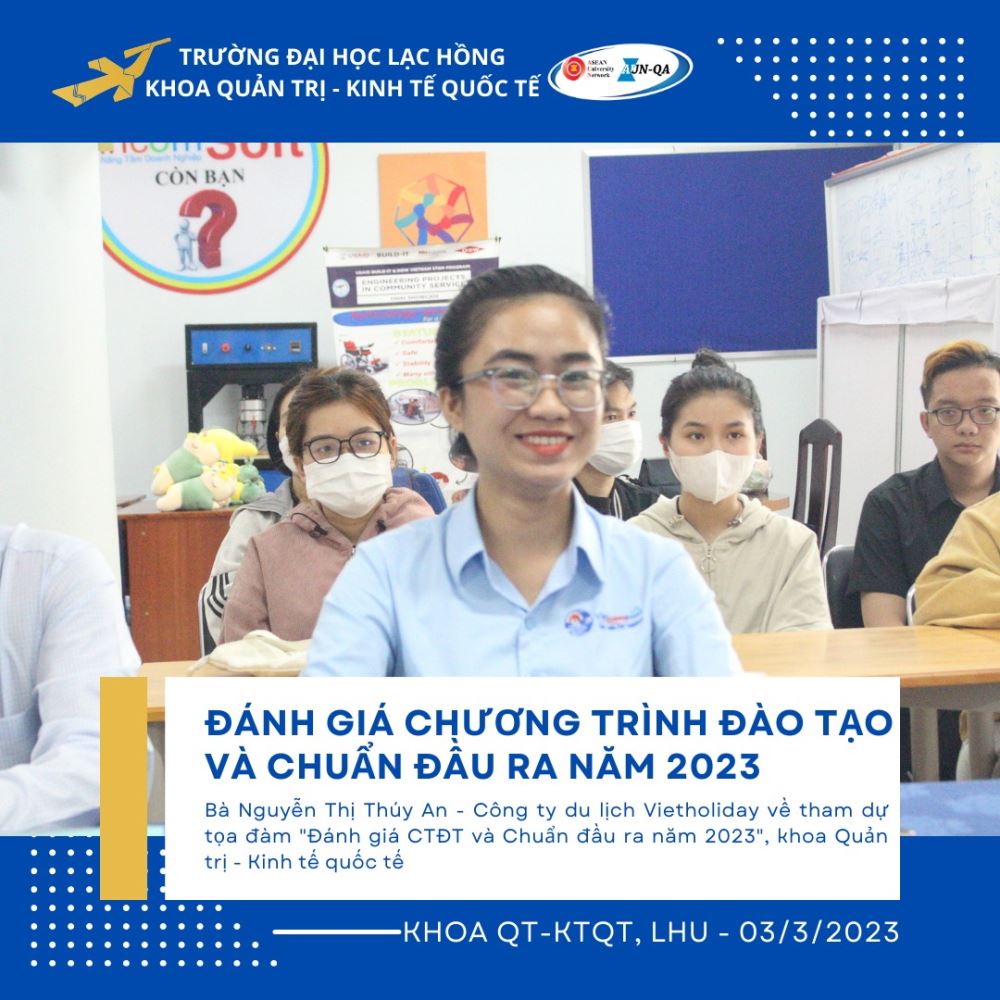
Ms. Nguyen Thi Thuy An shared that the current curriculum remains somewhat general and lacks strong specialization; knowledge content needs updating, and practical exposure should be increased, including studying tourism destinations, designing tour programmes, and learning additional skills in marketing, content creation, and video editing.
After the experts’ contributions, students actively raised long-standing questions for clarification by the experts, who provided guidance and solutions to support students in their personal development.
After a period of sharing valuable and noteworthy content, the seminar concluded successfully. Lecturers and students gained meaningful lessons and insights from the experts. All participants expressed determination to jointly enhance teaching and training quality in order to develop future generations effectively and in alignment with current trends.
